get care
Relief from Depression, OCD, and Anxiety with TMS
Transcranial magnetic stimulation (TMS) is a non-invasive therapy that uses targeted magnetic pulses to support brain areas involved in mood regulation. It’s commonly used when medications or therapy alone haven’t provided enough relief.
TMS is available as a standalone outpatient treatment and as part of our IOP, PHP, and residential programs.
It’s normal to have questions about TMS
Considering a brain-based treatment can feel intimidating at first. TMS is a well-studied, non-invasive therapy that’s used when symptoms haven’t fully improved with medication or therapy alone. If you’re exploring options and want clear, factual information, you’re in the right place.
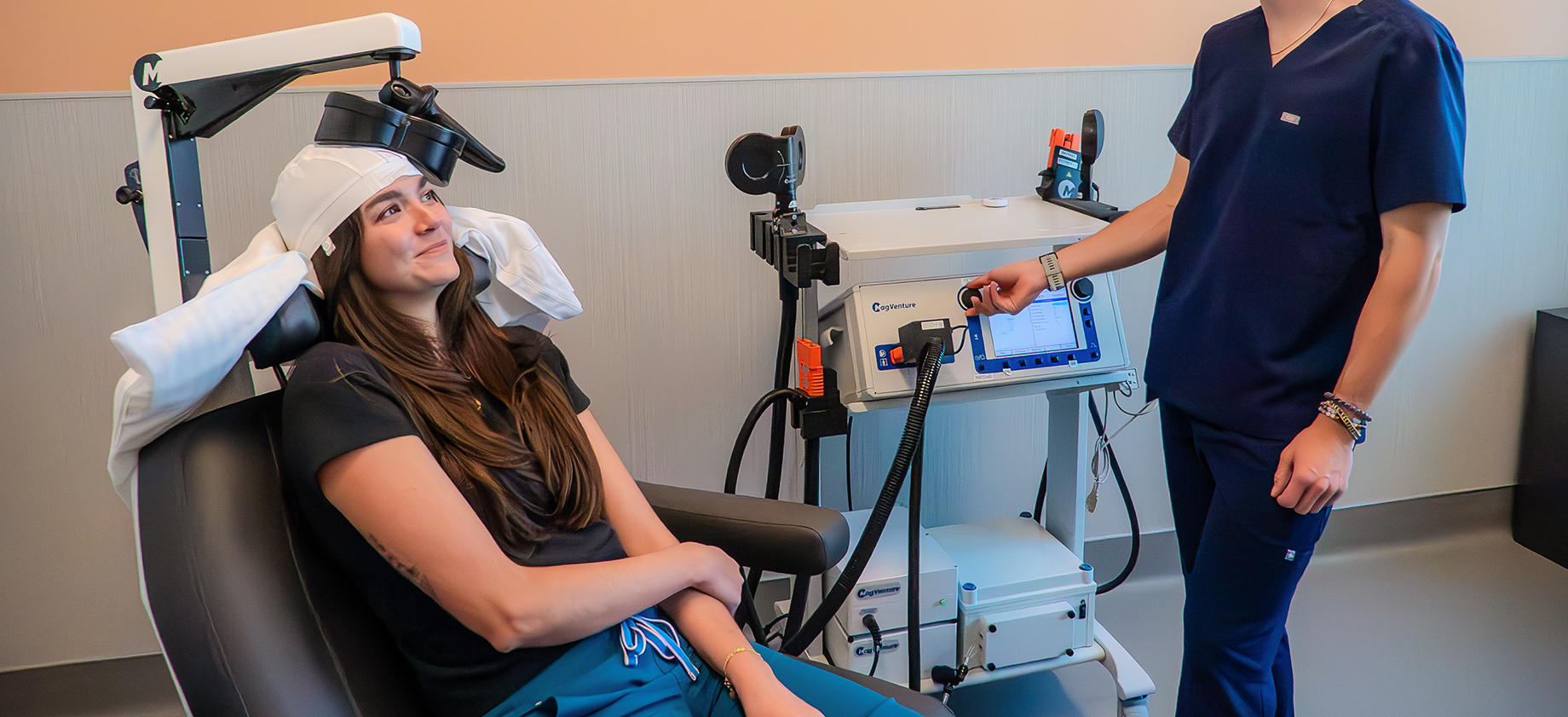
What to expect during TMS therapy

Words from our patients
Healing isn’t just possible. It happens here every day.
This program changed my life for the better. I never thought recovery was possible, but now I know it is.
Lizz F
See if TMS is right for you
If TMS has been recommended, or you’re exploring it as a next option, our team can help answer questions and determine whether this treatment is a good fit based on your symptoms and history.
5 minutes. No commitment required.
locations
Explore TMS treatment locations


Have questions? Find answers here
Is TMS safe?
Yes. Transcranial Magnetic Stimulation (TMS) is an FDA-cleared, non-invasive treatment that has been widely studied and used for years. It does not involve surgery, anesthesia, or sedation, and most people resume normal activities immediately after each session.
What does TMS feel like?
During treatment, you may feel a light tapping or clicking sensation on the scalp. Most people find it manageable, and sessions are completed while you’re fully awake and seated comfortably.
Who is TMS typically recommended for?
TMS is commonly recommended for individuals with depression or OCD who haven’t experienced enough relief from medication or psychotherapy alone. It’s often used alongside ongoing therapy rather than as a replacement for care.
Do I need to stop medication or therapy to receive TMS?
In most cases, no. TMS is often used in combination with existing treatments. Your care team will review your history and coordinate recommendations to ensure TMS fits safely into your overall treatment plan.